
What Sectors Are Most Affected by AI and How It Will Progress in the Future?
What is AI?
AI, or artificial intelligence, is a system designed to perform tasks that, until recently, only humans could carry out. These skills include learning, problem-solving and decision-making – all of which are continuously improving as technology advances.
There are many forms of AI, but one of the most widely recognised is ChatGPT. This powerful tool can generate images, write detailed and intelligent text, create descriptions and much more. It's estimated that AI systems like ChatGPT now receive over 2.5 billion prompts per day. Although traditional search engines such as Google still see around 14 billion searches daily, we are beginning to witness a major shift in how people seek and process information, a trend that will likely accelerate over the coming years.
Design Office.
The Timeline of AI and How It Has Evolved
It may feel like AI has only exploded in popularity in recent years, but in reality, its development stretches back decades. While the speed and sophistication of today's AI may have exceeded expectations, the foundations were laid long before most of us were born.
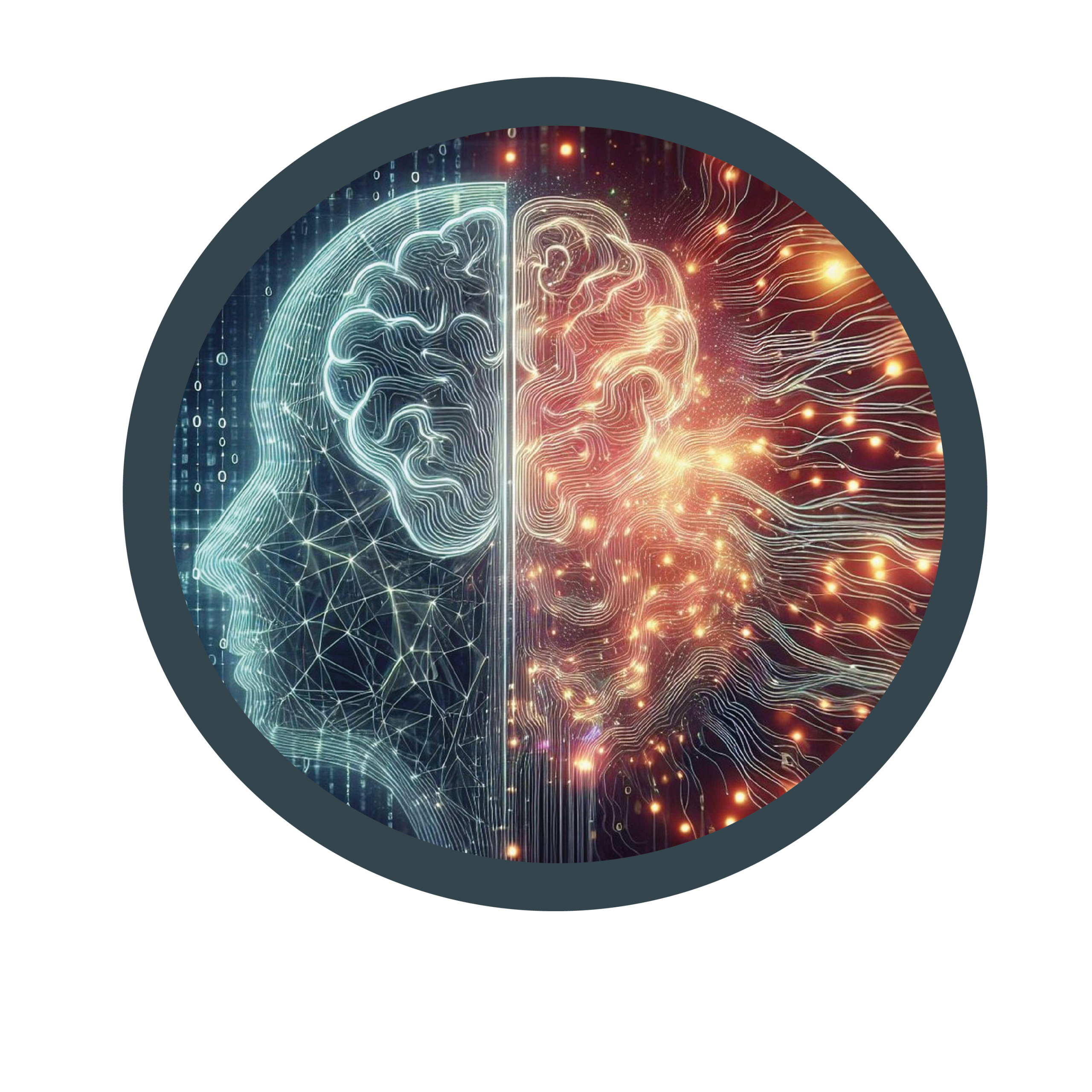
1950s – The Birth of AI
The origins of AI can be traced back to the work of Alan Turing, a British mathematician, computer scientist and codebreaker. Turing famously asked the question: "Can machines think?" In his groundbreaking 1950 paper, "Computing Machinery and Intelligence," he introduced the concept of the "Imitation Game", now known as the Turing Test.
In this test, a human evaluator engages in text-based conversations with both a human and a machine. If the evaluator cannot reliably tell which is which, the machine is said to have demonstrated human-like intelligence. Turing's ideas laid the foundation for modern computing and the entire field of AI research.
1956–1970s – The Early Days
The term "artificial intelligence" was officially coined in 1956 at the Dartmouth Conference, where scientists began exploring how machines could mimic human reasoning. Early AI programs could solve basic mathematical problems and play simple games like checkers. However, progress slowed due to limited computing power and lack of data – a period often referred to as the AI winter.
1980s–2000s – Machine Learning Emerges
With advances in computing, researchers began developing algorithms that could learn from data — the birth of machine learning. AI started to find practical use in industries such as finance (for fraud detection), healthcare (for diagnostics), and manufacturing (for automation).
2010s–Present – The Rise of Deep Learning
The explosion of data, faster processors, and cloud computing paved the way for deep learning — a subset of AI inspired by how the human brain processes information. This era gave rise to tools like speech recognition, image analysis, autonomous vehicles, and the AI assistants we use today.
What Sectors Are Most Affected by AI?
AI is rapidly transforming industries across the globe. Some of the most impacted sectors include:
- Healthcare
AI is revolutionising healthcare by improving diagnostics, predicting diseases, and personalising treatment. Tools can now analyse X-rays and MRIs faster than human radiologists, assist in drug development, and even monitor patient health through wearable devices.
- Education
In education, AI is being used for personalised learning experiences, automated grading, and virtual tutoring. Systems can now adapt content based on a student's ability level, helping teachers save time and students learn more effectively.
- Finance
From automated trading to fraud detection and customer service chatbots, AI has become an integral part of the financial world. Algorithms can analyse vast amounts of data in seconds, identifying trends and risks that humans might overlook.


4. AI-driven analytics tools help marketers understand audiences better than ever before. From predicting customer behaviour to generating content, AI is transforming how brands connect with their target markets — delivering more personalised and efficient campaigns.
- Manufacturing
Automation powered by AI is reshaping production lines. Robots can now self-monitor, predict maintenance needs, and optimise efficiency, reducing downtime and human error.
- Transport and Logistics
AI is at the heart of innovations like self-driving vehicles, route optimisation, and predictive maintenance. Companies such as Tesla, Waymo, and major logistics firms use AI to improve safety, efficiency, and delivery speed.
How Will AI Progress in the Future?
AI's potential is almost limitless, and its development shows no signs of slowing down. In the coming years, we can expect:
- More Human-Like Interactions
AI systems will become even more conversational and emotionally intelligent, allowing for more natural interactions between humans and machines — from customer support to companionship.
- Smarter Decision-Making
Businesses will increasingly rely on AI for complex decision-making, using predictive analytics to anticipate problems and opportunities before they arise.
- Job Evolution, Not Just Automation
While AI will automate certain tasks, it will also create new roles that require creativity, strategy, and emotional intelligence — qualities machines can't yet replicate.
- Ethical and Regulatory Growth
As AI becomes more powerful, discussions around ethics, transparency, and data privacy will shape its future. Governments and organisations will need to set clear standards to ensure responsible development.
- Integration into Everyday Life
From personalised healthcare to smart cities and autonomous vehicles, AI will continue to blend seamlessly into our daily routines — often in ways we won't even notice.
Final Thoughts
Artificial intelligence is not just a trend – it's a technological revolution shaping the way we live, work, and think. While its rapid progress raises important questions about ethics, employment, and creativity, it also presents extraordinary opportunities for innovation and growth.
AI is no longer a concept of the future – it's the present, and its story has only just begun.
Tel: 01270 252106
Email: sales@designoffice.co.uk